
Industry automation
Automated Roll Handling
Sage builds automated roll-handling systems for heavy cylindrical loads that require controlled support, orientation and machine interface throughout production.
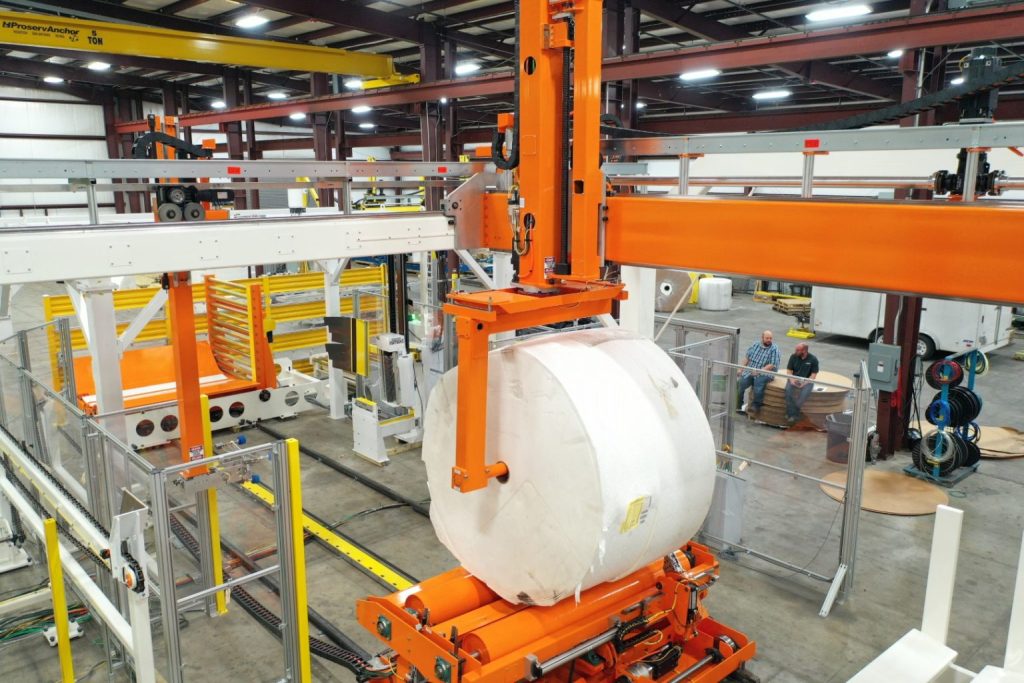
Move heavy rolls without sacrificing product quality or operator safety
Roll handling requires careful control of weight, diameter, width, winding direction and surface condition. Tooling must support the load without telescoping, edge damage or uncontrolled rotation while still allowing efficient process access.
Sage can integrate robots, gantries, rail carts, conveyors, cradles, shaft-handling devices and storage systems. Controls coordinate the roll identity, machine state and material route through the operation.
Application data to define
- Maximum roll weight and inertia
- Diameter, width and core range
- Allowable surface and edge contact
- Axis orientation at pickup and placement
- Shaft, chuck and cradle interfaces
- Roll identification and route control
What the system can include
Roll transport
Move rolls between storage, unwinders, winders, inspection, packaging and shipping positions.
Core and shaft operations
Automate shaft extraction, core placement and controlled handoff to winding equipment.
Rotation and orientation
Position roll axes and winding direction correctly for the receiving machine or material route.
Project video library
See related Sage systems in operation
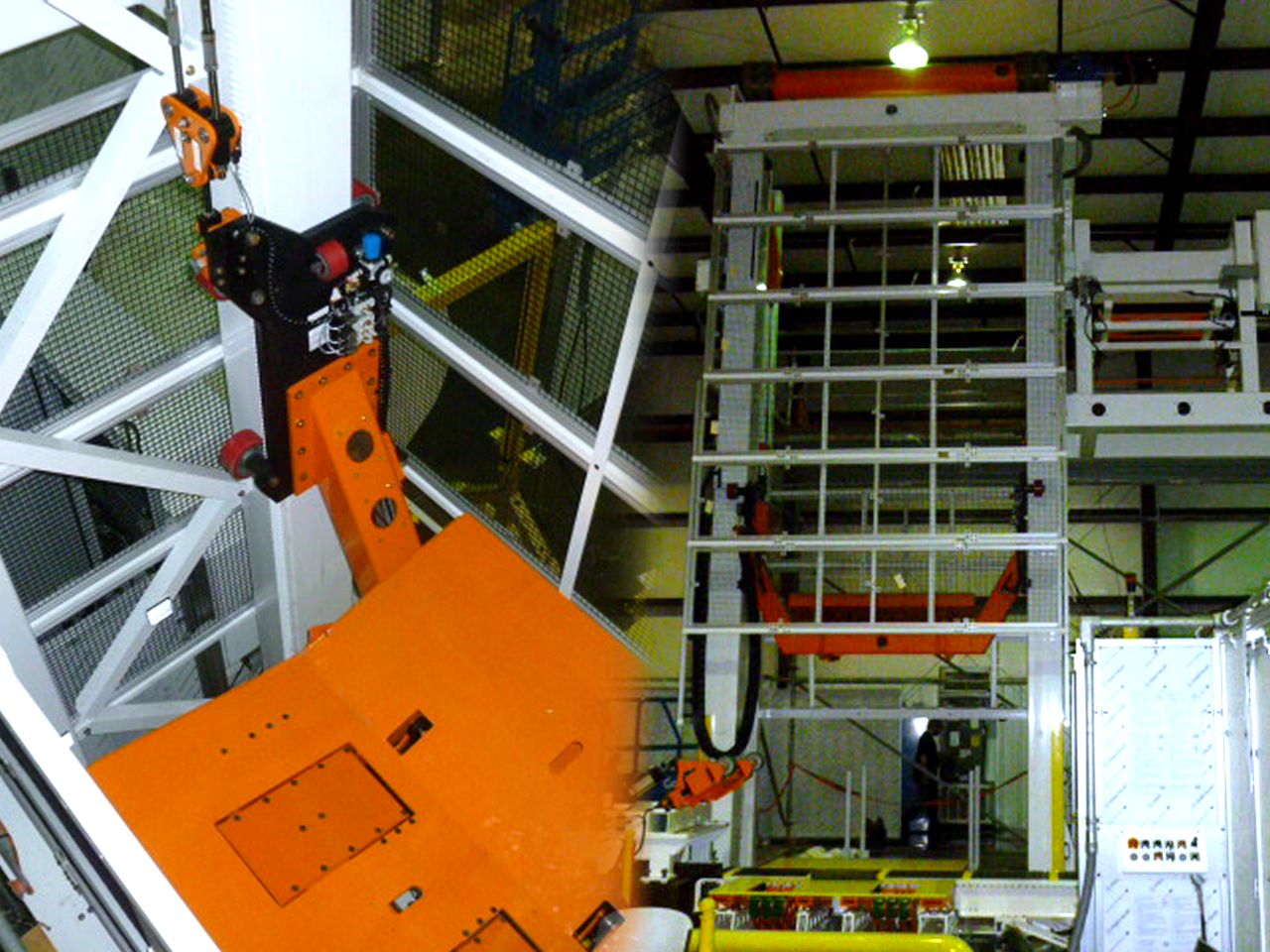
Related project images
Frequently asked questions
How are rolls gripped?
Depending on the product and process, tooling may support the outside diameter, engage the core, carry a shaft or cradle the roll. Sage selects the method from the product requirements.
Can a roll system handle multiple diameters and widths?
Yes, within an engineered range. Tooling, clearances, payload and control recipes are designed around the specified product family.
Continue your application research
Bring us the application data.
Share the product, payload, rate, process sequence and available layout with a Sage applications engineer.