
Robot systems
Robot and Automation Simulations
Sage uses robot and system simulation to expose reach, clearance, sequence and throughput risks while design decisions can still be changed efficiently.
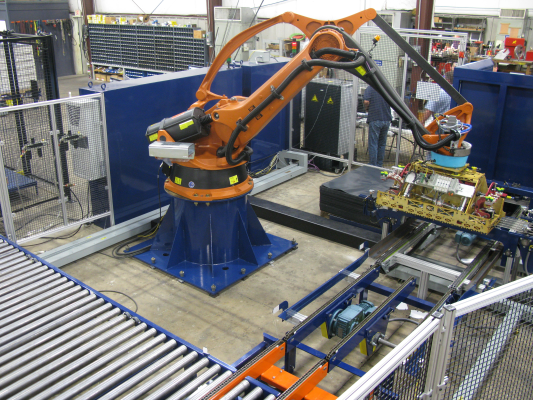
Validate the automation concept before equipment is built
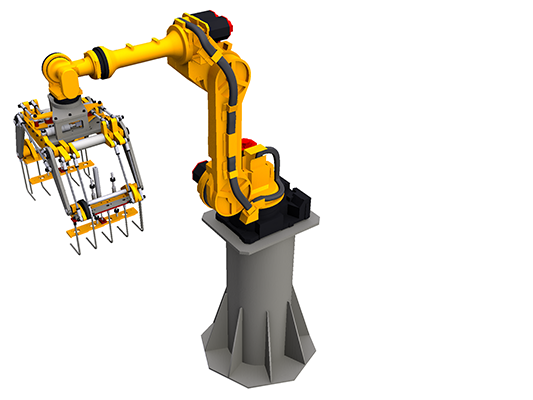
Simulation converts an application concept into a measurable motion and material-flow model. Robot reach, joint positions, tool orientation, interferences and cycle-time assumptions can be evaluated before final mechanical design and fabrication.
For gantry and articulated systems alike, simulation supports better platform selection and a clearer understanding of product presentation, cell layout and upstream or downstream constraints. The model becomes an engineering tool rather than a sales animation.
Application data to define
- Accurate product and tooling geometry
- Robot payload and inertia data
- Machine and conveyor timing
- Required process dwell times
- Operator and maintenance access
- Abnormal sequence and recovery needs
What the system can include
Reach and clearance studies
Confirm that the robot and tooling can reach every required position without structural or process interference.
Cycle-time analysis
Evaluate motion, dwell time, handshakes and material availability against the required production rate.
Concept communication
Use a shared visual model to review layout, sequence and operator interaction before detailed design begins.
Project video library
See related Sage systems in operation
Related project images
Frequently asked questions
Can simulation guarantee the final cycle time?
Simulation can validate robot motion and modeled process timing, but final throughput also depends on real product behavior, controls handshakes and connected equipment. Sage documents the assumptions used.
Is simulation useful for gantry robots?
Yes. It is valuable for checking travel, acceleration, tool orientation, multi-station sequencing and interactions between the gantry and surrounding equipment.
Continue your application research
Bring us the application data.
Share the product, payload, rate, process sequence and available layout with a Sage applications engineer.