
Engineering and service
Preventive Maintenance Programs
Preventive maintenance helps identify wear, contamination, backup and adjustment issues before they become unplanned production failures.
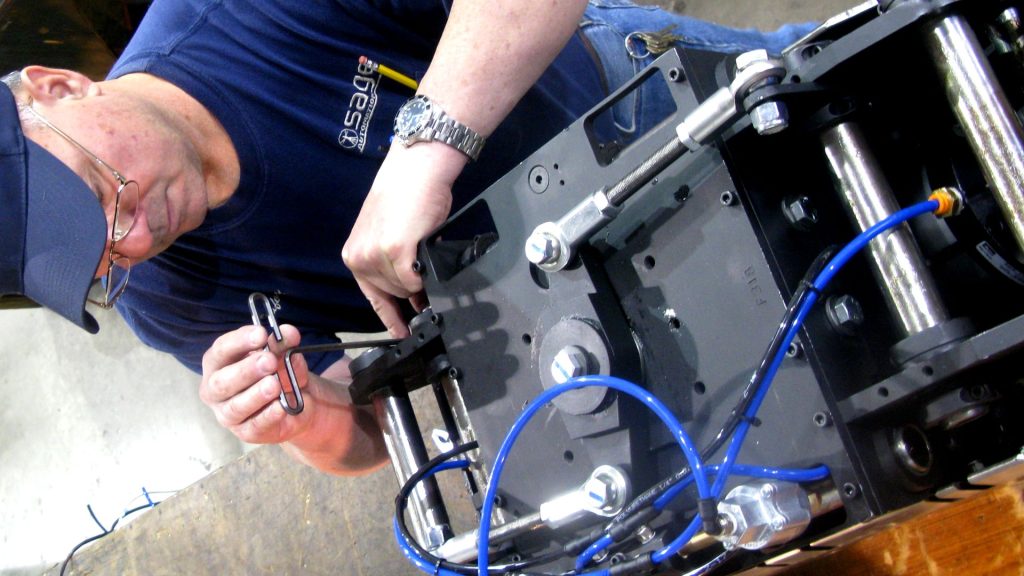
Plan maintenance around duty cycle and production risk
Robotic systems combine structures, bearings, drives, tooling, sensors, cables, controls and safety devices. Maintenance frequency should reflect motion, payload, environment, operating hours and the consequence of failure—not a generic calendar alone.
Sage can review system condition, recommend service activities, verify backups and document observations for equipment it manufactured or integrated. Findings can support spare-parts planning and future upgrade decisions.
Application data to define
- Operating hours and duty cycle
- Payload and motion severity
- Dust, heat, moisture or contamination
- Recurring alarms and operator observations
- Critical spares and lead times
- Available maintenance shutdowns
What the system can include
Mechanical inspection
Review structures, wear components, tooling, alignment and visible indications of abnormal loading.
Controls and backup review
Confirm current robot, PLC and HMI backups and examine recurring alarms or degraded sensing.
Maintenance planning
Document observations and prioritize repairs, spares or upgrades according to production risk.
Frequently asked questions
How often should a robot system receive preventive maintenance?
The interval depends on equipment, operating hours, payload, environment and manufacturer recommendations. Sage develops the scope from the specific system conditions.
Does preventive maintenance include program backups?
Backup review can be included and is strongly recommended for robot, PLC, HMI, drive and safety-system software.
Continue your application research
Bring us the application data.
Share the product, payload, rate, process sequence and available layout with a Sage applications engineer.