
Engineering and service
Robotic Equipment Upgrades
Sage modifies robotic and material-handling equipment when products, production goals, safety requirements or component availability change.
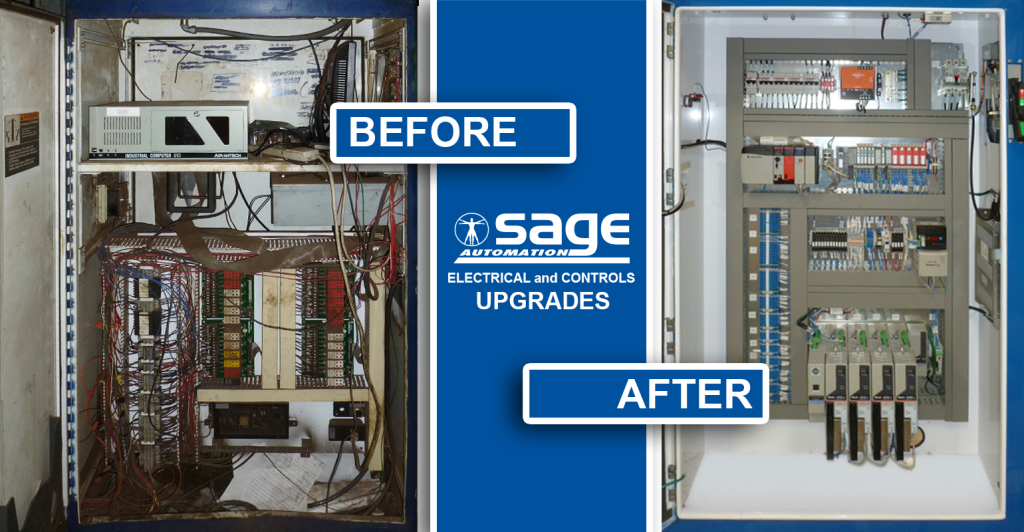
Extend useful equipment life with application-driven upgrades
An upgrade begins with the current machine condition and the new requirement. Product changes may affect payload, tooling, fixtures, clearances, cycle time and software. Reliability projects may involve worn mechanics, obsolete controls or recurring fault conditions.
Sage reviews the complete system before defining mechanical, electrical and programming changes. Simulation, staged testing and planned installation help reduce risk when modifying equipment that production already depends on.
Application data to define
- Current equipment condition
- Original drawings and software backups
- New product and rate requirements
- Payload and structural impact
- Safety-system implications
- Installation window and production contingency
What the system can include
New product capability
Modify tooling, fixtures, recipes and motion for additional product sizes or process requirements.
Reliability improvements
Address recurring mechanical, sensing, controls or material-flow problems with engineered changes.
Safety modernization
Update guarding, access controls and safety functions as part of a defined machine risk-reduction scope.
Frequently asked questions
Can Sage upgrade equipment built by another integrator?
It may be possible after an engineering review of documentation, controls access, equipment condition and required scope. Sage prioritizes systems it originally delivered.
Can an upgrade add new product sizes?
Yes, when the robot, tooling, fixtures, payload and available space can support the expanded range. Sage evaluates the complete motion and process impact.
Continue your application research
Bring us the application data.
Share the product, payload, rate, process sequence and available layout with a Sage applications engineer.