
Industrial automation applications
Robotic Depalletizing Systems
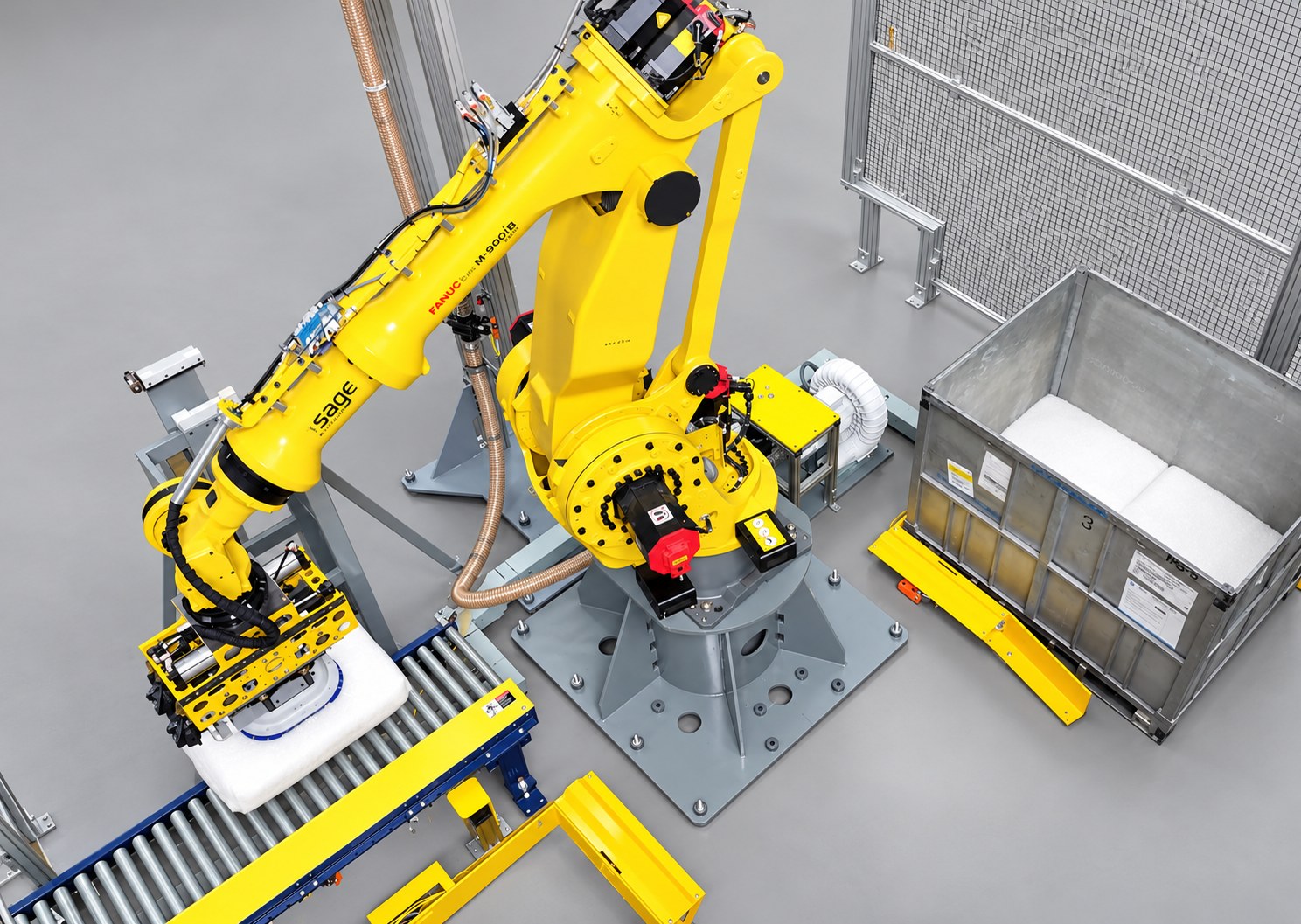
Sage designs robotic depalletizing systems that remove products reliably from layered, patterned or variable inbound loads and introduce them into production.
Reliable unloading begins with understanding load variation
Inbound pallets may shift during transport, arrive with damaged packaging or vary by supplier and SKU. Sage evaluates the expected load condition, product surface and separation method before selecting tooling, sensing and robot motion.
A depalletizing cell can include load positioning, layer detection, vision, sheet removal, empty-pallet handling, product conveyors and exception recovery. FANUC articulated robots or Sage gantries are selected according to payload, reach, rate and access requirements.
Application data to define
- Inbound pallet consistency
- Product damage and packaging variation
- Layer sheets, straps and wrapping
- Required discharge orientation
- Empty-pallet and dunnage handling
- Exception and manual-recovery strategy
What the system can include
Layer and case handling
Remove full layers or individual products according to rate, stability and downstream process requirements.
Variable load detection
Use sensing or vision when pallet position, stack height or product arrangement cannot be assumed.
Downstream presentation
Orient, meter and convey unloaded products so the next operation receives a controlled flow.
Choose the unloading method around the inbound load
A consistent pallet pattern and a variable inbound stack present different handling problems. Define how products will be separated, gripped and delivered to the next process before specifying the robot.
Full-layer depalletizing
Evaluate layer stability, sheet separation and whether the downstream equipment can accept an entire layer. Include the weight and dimensions of the complete layer when defining tooling and payload requirements.
Individual product unloading
Consider individual picks when products need separate orientation or controlled spacing. Product surfaces, accessible gripping points and packaging variation influence the tooling and sensing approach.
Gantry or articulated robot
A Sage gantry robot or FANUC articulated robot may suit the cell. Compare the required work area, payload, reach, travel, headroom and access with the complete unloading sequence.
Frequently asked questions
Do depalletizing systems require vision?
Not always. Highly repeatable loads may use fixed positions or sensing, while variable stacks and mixed products often benefit from 2D or 3D vision.
Can the same cell palletize and depalletize?
In some applications a shared robot can perform both functions, provided the layout, tooling, cycle time and production schedule support the combined operation.
Plan for real inbound conditions
What happens to wrap, straps, sheets and empty pallets?
Define each material flow in the project scope. Identify which packaging is removed before the load enters the cell, which items require dedicated handling and where empty pallets and dunnage are discharged. These tasks affect the layout and total cycle time.
How should damaged or shifted loads be handled?
Provide examples of acceptable and unacceptable incoming loads. The cell design should define detection, rejection or operator recovery for loads outside the agreed handling conditions, including safe access and restart procedures.
What should I send for a depalletizing review?
Share product dimensions and weights, pallet and stack heights, photos of typical and worst-case loads, packaging and layer-sheet details, the required unloading rate and a floor plan. Include the downstream orientation and spacing requirements. Ask Sage applications engineering to review the project.
Continue your application research
Bring us the application data.
Share the product, payload, rate, process sequence and available layout with a Sage applications engineer.